
"coffee climate needs"
8000 article(s) found

Boutique coffee beans the best production environment for Hawaiian Kona coffee
Hawaiian Kona coffee mellow and sour coffee beans, unique growth and climatic environment make Hawaii Kona perfect flavor: Hawaiian beach, monsoon and volcanic flavor. Kona coffee beans produced in Hawaii are the most beautiful coffee beans in the world. They are extremely full and shiny. Kona coffee beans are evenly shaped, strongly sour and sweet, and taste wet and smooth.

Some problems about Coffee production in Yunnan
At present, Yunnan coffee production is mainly distributed in Pu'er (180000 mu), Baoshan (100000 mu), Dehong (120000 mu) and Lincang (20 mu). Most of them are catimor varieties. At present, more than 80% of them are used as raw materials for instant coffee processing, some are supplied to Nestl é, and some are exported to Europe and the United States by local traders. From the grading criteria of specialty coffee

Some problems about Coffee production in Yunnan
At present, Yunnan coffee production is mainly distributed in Pu'er (180000 mu), Baoshan (100000 mu), Dehong (120000 mu) and Lincang (20 mu). Most of them are catimor varieties. At present, more than 80% of them are used as raw materials for instant coffee processing, some are supplied to Nestl é, and some are exported to Europe and the United States by local traders. From the grading criteria of specialty coffee
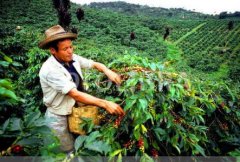
Cultivation of sweet citrus coffee beans in Rwanda A brief introduction to the geographical location, climate and altitude
In June 2002, representatives of public coffee visited Malaba. At that time, the current President of Rwanda, Paul Kagame, declared the importance of the plan on behalf of the government. Public Coffee bought 18000 kilograms (40000 pounds) of Malaba beans at $3 per kilogram above the average market price. Coffee beans are transported to Louisiana, where they are roasted and used in

Introduction to the characteristics of Burundian coffee bean flavor and taste varieties grinding degree manor treatment
The treatment of Burundian coffee was first brought in by the Germans in the 1900s; they found that bourbon was the most suitable coffee variety to grow in the local climate, which is usually a tropical plateau climate with a very large temperature difference between day and night. However, due to the suspension of investment in coffee research, bourbon has become the only coffee variety left in the country and has been in full use.

Hawaiian boutique Kona coffee with a slight sour taste an introduction to the characteristics of the manor area
The quality of the fine Kona coffee is suitable for the right geographical location and climate. Coffee trees grow on the slopes of volcanoes, and their geographical location ensures the altitude needed for coffee to grow; the dark volcanic ash soil provides the necessary minerals for coffee. This is probably due to the fact that Kona Island is rich in volcanic black mud with moderate acidity, rich mineral content and suitable water content. Parallel

Grass-scented boutique coffee beans from Rwanda: a brief introduction to geographical location, climate and altitude
The mission of the Rwanda Coffee Association is to manage and supervise the operation of the coffee industry in Rwanda from production to sale. The recently revised mission focuses on policy formulation and implementation, with more emphasis on the need to improve the professionalism of the coffee industry and to increase marketing efforts. Since the establishment of the Rwanda Coffee Association, it has developed Rwanda very well.

An introduction to the Geographic Environment, Weather and Climate of Kona Coffee producing area in Hawaii
The real Hawaiian Kona coffee makes people enjoy the unique pleasure and leads you slowly into the detached state of tasting coffee. And this comes entirely from the oldest Arabica coffee tree. Hawaii is the only state in the United States that grows coffee, which is grown on the five major islands of the Hawaiian Islands: Oahu, Hawaii, Maui, Kauai and Moroca.
Some problems of Coffee production in Yunnan in Chinese Coffee Market
At present, Yunnan coffee production is mainly distributed in Pu'er (180000 mu), Baoshan (100000 mu), Dehong (120000 mu) and Lincang (20 mu). Most of them are catimor varieties. At present, more than 80% of them are used as raw materials for instant coffee processing, some are supplied to Nestl é, and some are exported to Europe and the United States by local traders. From the grading criteria of specialty coffee
General knowledge of Asian Fine Coffee on Coffee production in Yunnan
At present, Yunnan coffee production is mainly distributed in Pu'er (180000 mu), Baoshan (100000 mu), Dehong (120000 mu) and Lincang (20 mu). Most of them are catimor varieties. At present, more than 80% of them are used as raw materials for instant coffee processing, some are supplied to Nestl é, and some are exported to Europe and the United States by local traders. From the grading criteria of specialty coffee

The technology of planting coffee trees what kind of soil do coffee trees need to be planted on?
Coffee planting requires a lot of climate, which is why only Yunnan and Taiwan can grow coffee trees in China. Coffee is not strict on the land, idle land can also be planted, but with good drainage, deep soil, loose and fertile sandy soil is appropriate. Second, seed selection of planting techniques: before sowing, the germination rate of seeds should be tested. Specific method: put the grain

Sweet and smooth bourbon boutique coffee beans planting situation, geographical location, climate and altitude
In 1810, some of the round beans in Bourbon Island mutated into pointed beans, which is known as the "pointed bourbon". It is characterized by a caffeine content of only half, low yield, weak physique, and extremely rare, just like a weak aristocratic teenager. In addition, the biggest thing that iron pickup and bourbon have in common is the need for shade trees to protect them from the sun.

Brazilian coffee characteristics the output of Brazilian coffee beans how to drink Brazilian coffee? Brazilian Santos
Professional coffee knowledge exchange more coffee bean information please follow Coffee Workshop (Wechat official account cafe_style) Brazil, the world's largest coffee producer, covers both commercial and boutique coffee, while Brazil accounts for 30 per cent of global coffee usage. In addition to the original conditions such as climate and geographical area, Brazil has created a huge national harvest today because of coffee industrialization.
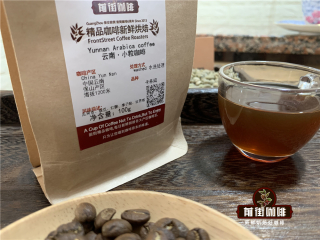
Where is the best coffee producing area in Yunnan? what is the taste of Yunnan small coffee beans?
Professional coffee knowledge exchange more coffee bean information please follow the coffee workshop (Wechat official account cafe_style) Qianjie-Yunnan Baoshan Coffee introduction small grain coffee is suitable for growing in the mountains with an elevation of 800m to 1800m, if the altitude is too high, it will taste sour and too low will taste bitter. Most of the small grains of coffee are planted at altitude

How to make Brazilian Santos Coffee? description of taste and flavor of Brazilian Santos coffee
Professional coffee knowledge exchange more coffee bean information please follow Coffee Workshop (Wechat official account cafe_style) Brazil, the world's largest coffee producer, covers both commercial and boutique coffee, while Brazil accounts for 30 per cent of global coffee usage. In addition to the original conditions such as climate and geographical area, Brazil has created today's huge national income because of coffee industrialization.
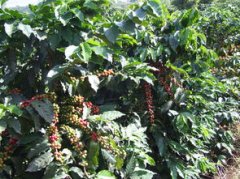
Coffee knowledge what conditions are needed for coffee cultivation
There is a noun called Coffee Belt. There are more than 60 coffee producing countries in the world, most of which are located in the tropics and subtropics between the Tropic of Cancer (latitude 2326). This coffee growing area is called a coffee belt or coffee area (Coffee Zone). The annual average temperature of the coffee belt is above 20 ℃, because the coffee tree is a tropical plant, and if the temperature is below 20 ℃,

What natural conditions are needed to grow high-quality coffee? How is the coffee fruit grown?
Professional coffee knowledge exchange more coffee bean information Please pay attention to the coffee workshop (Wechat official account cafe_style) what are the natural conditions for growing high-quality coffee fruit? How is the coffee fruit grown? Coffee tree, is a tropical plant, is an evergreen shrub, growing in the equator, latitude 25 degrees north and south, that is, within the Tropic of Cancer. North-South Hui

Arabica coffee is on the verge of extinction, fit and cherish!
It's hard to imagine what it would be like without this rich, bitter black liquid in a world that consumes 1.5 billion cups of coffee a day. But it is not impossible for such a world without coffee to become a reality. Scientists tell us that half of the arable land needed to produce coffee will disappear by 2050. Arabica, the most consumed coffee variety in the world, will be extinct in the wild by 2080.

Will the weather affect the flavor of the coffee during processing? What is the process of coffee processing?
As discussions about climate change become mainstream in the media in 2019, it is well known that global warming is no longer a distant future. Rising sea levels and rising temperatures have affected many aspects of human life. Agriculture is one of the most changing areas, and agriculture itself is also an important factor in greenhouse gas emissions. This will have a significant impact on coffee production.

Flavor description of Robusta coffee beans Variety characteristics Taste grindness Introduction
Robasta beans This is actually a standardized process for professional cup testing systems. For the general public who drink coffee is just a simple hobby, there is really no need to be serious. Moreover, the taste itself is a very subjective thing. I think it is good to drink coffee beans. In addition to the general classification of coffee beans, different soils and climates also have great quality of coffee beans.